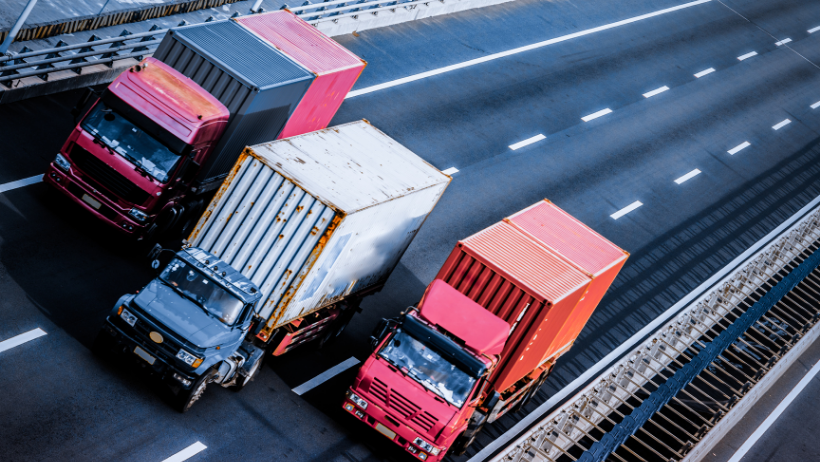
Businesses that own vehicles or use them for work face risks every time a driver gets behind the wheel. Commercial auto insurance can help protect your vehicles, employees, and business finances after a covered accident. Below are answers to common commercial auto insurance questions.
What is commercial auto insurance?
Commercial auto insurance covers vehicles used for business purposes. Depending on the coverage selected, it may help pay for injuries, property damage, vehicle repairs, medical expenses, and other losses resulting from a covered accident.
Policies can cover cars, pickup trucks, vans, service vehicles, and certain larger commercial vehicles.
Who needs commercial auto insurance?
A business may need commercial auto insurance if it:
- Owns or leases vehicles
- Uses vehicles to transport tools or equipment
- Makes deliveries
- Travels to customer locations
- Transports people for business purposes
- Allows employees to drive company vehicles
- Uses vehicles titled in the company’s name
Contractors, restaurants, retailers, professional firms, service companies, and many other businesses may need this coverage.
What does commercial auto insurance cover?
Available coverage may include:
- Bodily injury liability
- Property damage liability
- Collision coverage
- Comprehensive coverage
- Medical payments or personal injury protection
- Uninsured and underinsured motorist coverage
- Towing and roadside assistance
- Rental reimbursement
Coverage options and legal requirements vary by state.
What does auto liability insurance cover?
Commercial auto liability insurance can help pay when your business or an insured driver is legally responsible for injuring another person or damaging someone else’s property.
It may also pay legal defense expenses for a covered accident. Liability coverage does not normally pay to repair your company’s vehicle.
What is the difference between collision and comprehensive coverage?
Collision coverage can pay for damage to an insured vehicle caused by a collision with another vehicle or object.
Comprehensive coverage applies to certain noncollision losses, including theft, vandalism, fire, falling objects, and weather-related damage. Both coverages are usually subject to a deductible.
Will personal auto insurance cover business driving?
A personal auto policy may exclude or restrict coverage when a vehicle is regularly used for business. Business owners should not assume their personal policy will cover deliveries, employee use, client transportation, or regular travel between jobsites.
An insurance agent can help determine whether a commercial auto policy or a business-use endorsement is appropriate.
Are employees covered when driving company vehicles?
Employees may be covered when driving an insured company vehicle with permission and for an approved business purpose. Coverage depends on the policy, the driver, and how the vehicle was being used.
Businesses should review employee driving records, provide driver-safety training, and establish written vehicle-use policies.
What is hired and non-owned auto insurance?
Hired and non-owned auto liability insurance protects a business when vehicles it does not own are used for work.
Hired auto coverage generally applies to rented or leased vehicles. Non-owned auto coverage may apply when employees use personal vehicles for business activities.
This coverage primarily protects the company against liability claims. It does not automatically pay for physical damage to an employee’s personal vehicle.
Are tools or products inside the vehicle covered?
Commercial auto insurance generally does not cover tools, equipment, inventory, or customer property carried inside a vehicle. Separate inland marine, contractors equipment, cargo, or commercial property coverage may be needed.
Businesses should discuss what they transport and how those items should be insured.
Does commercial auto insurance cover every driver?
Not necessarily. Insurance companies may require a list of approved drivers and may exclude individuals with unacceptable driving records.
Companies should notify their insurance agent when employees begin or stop driving business vehicles. Allowing an unlisted, unauthorized, or excluded driver to operate a vehicle can create serious coverage problems.
How much commercial auto coverage does a business need?
Appropriate limits depend on vehicle use, business assets, contract requirements, state law, and the potential severity of an accident.
Minimum legal limits may not provide enough protection after a serious collision. A commercial umbrella or excess liability policy may provide additional coverage above the commercial auto liability limits.
How much does commercial auto insurance cost?
Premiums may be affected by:
- Number and type of vehicles
- Vehicle size and value
- Business operations
- Driving locations and mileage
- Employee driving records
- Claims history
- Coverage limits
- Deductibles
- Materials or passengers transported
Businesses with heavy vehicles, long-distance travel, frequent deliveries, or poor driving histories may pay more.
How can a business reduce commercial auto claims?
Businesses can reduce risk by:
- Checking motor vehicle records
- Establishing written driver standards
- Prohibiting distracted driving
- Providing defensive-driving training
- Maintaining vehicles regularly
- Using telematics or vehicle-monitoring technology
- Investigating accidents and near misses
- Requiring immediate accident reporting
Consistent driver management can help prevent injuries, control insurance costs, and protect the company’s reputation.
What should a driver do after an accident?
The driver should move to a safe location when possible, call emergency services, exchange information, photograph the scene, identify witnesses, and avoid admitting fault.
The accident should be reported to the business and insurance company promptly. Businesses should maintain an accident-response kit in every company vehicle.
Protect Your Business on the Road
A single vehicle accident can lead to costly repairs, injuries, lawsuits, and lost productivity. [Agency Name] can help evaluate your vehicles, drivers, and business activities and recommend appropriate commercial auto coverage.
Contact us today for a commercial auto insurance review.
Coverage descriptions are general. Actual coverage is determined by the policy’s terms, conditions, limits, endorsements, and exclusions.







Leave A Comment